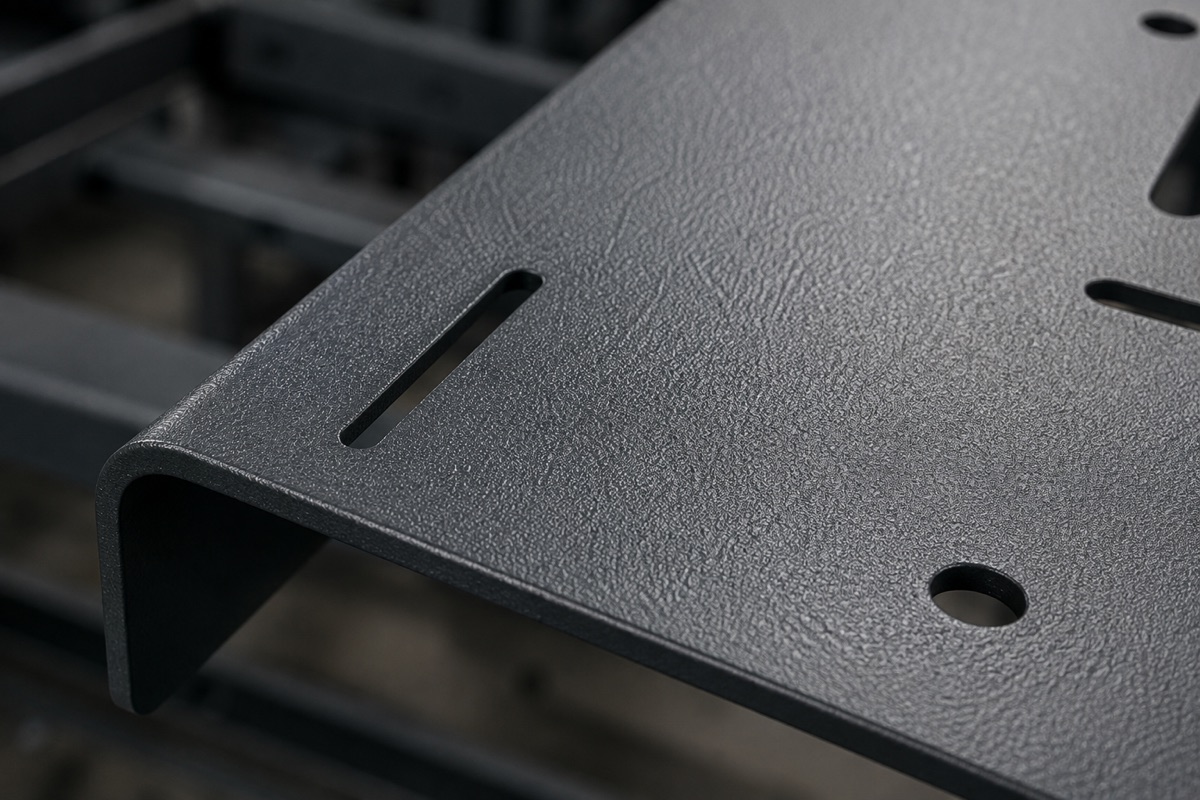
The most obvious difference is the carrier. Wet paint needs solvent to stay liquid; powder coating has none, so the coating itself produces virtually no VOC emissions.
Durability comes from how the film forms. A cured powder coat film is a single cross-linked layer, which makes it significantly harder and more scratch- and impact-resistant than an equivalent air-dried wet paint film.
Powder coating goes on thicker in a single pass — typically 60–100 µm versus 20–40 µm for wet paint — and covers edges and corners more evenly thanks to electrostatic attraction.
Wet paint still has the advantage where powder can't reach: large parts that won't fit in an oven, heat-sensitive assemblies, multi-layer thin effects, and on-site spot repairs.
On cost, powder coating is generally more economical per part for volume runs — overspray powder is recovered, there's no solvent to buy or dispose of, and curing takes minutes rather than a long dry time.